Redesigning the Full Maintenance Contract and Component Budgeting Framework for the Largest Mining Heavy Equipment Provider
- Industry
- Manufacturing
- Industrial Equipment & Machinery
- Client
- The Largest Mining Heavy Equipment Provider
- Service
- Management Consulting
- Solution
- Redesign of Full Maintenance Contract and Component Budgeting Framework
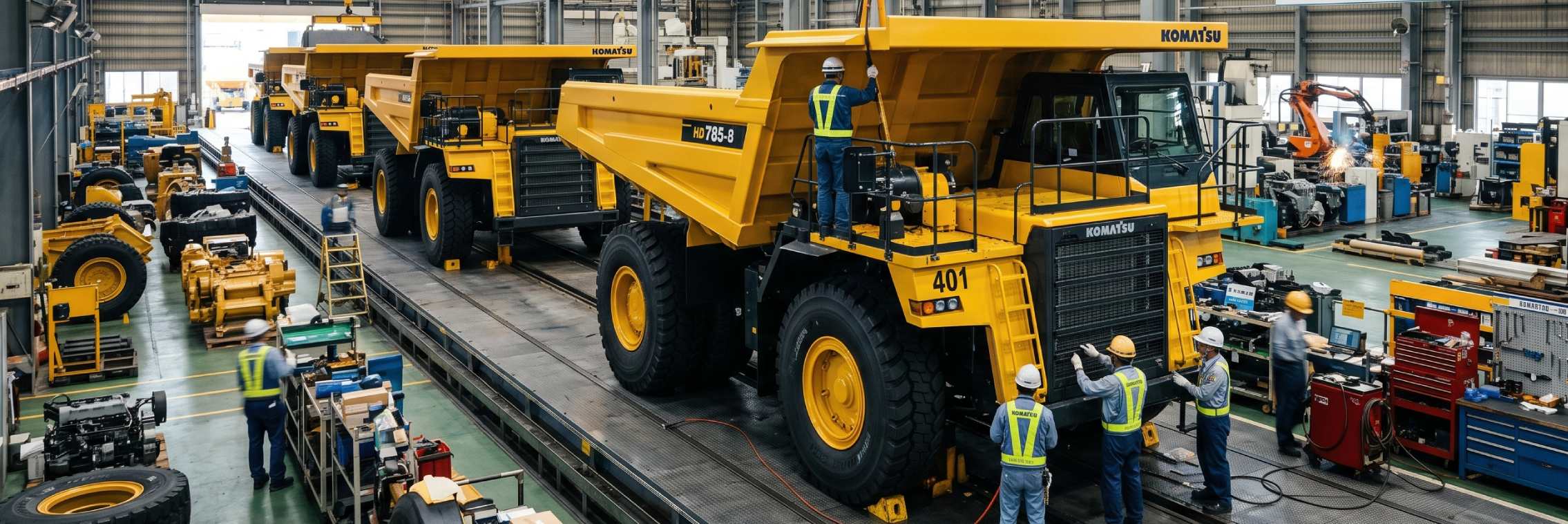
The Company is the largest provider of mining heavy equipment in its market, offering full maintenance contracts covering scheduled servicing, component replacement, and repair for a large installed base of machines operated by mining customers. Component budgeting underpins the pricing and profitability of these long-term contracts.
- Full maintenance contract terms not consistently structured across the customer portfolio
- Component budgeting methodology not standardised, creating variance in contract profitability
- Limited linkage between actual component wear data and budgeted replacement costs
- Contract pricing not systematically informed by equipment utilisation and operating conditions
- Inconsistent contract profitability visibility across the large installed equipment base
- Full maintenance contracts are a core, high-volume revenue stream where component budgeting accuracy directly determines margin
- Standardising the budgeting framework reduces variance in contract profitability across a large and diverse customer portfolio
- Linking component wear data to budgeting improves the accuracy of future contract pricing
- As the installed base and contract volume grow, an inconsistent framework compounds into larger margin variance across the portfolio
Contract & Budgeting Diagnostic
Assessed current full maintenance contract terms and component budgeting practices across the customer portfolio.
Component Budgeting Framework Redesign
Redesigned the component budgeting methodology, linking budgeted costs to equipment utilisation and operating conditions.
Contract Structure Standardisation
Standardised full maintenance contract terms and pricing structures across the customer portfolio.
Wear Data Integration
Integrated component wear and utilisation data into the budgeting process to improve forecasting accuracy.
Rollout & Sales/Contract Team Training
Rolled out the redesigned framework with training for sales, contract, and service teams.
- Standardised Full Maintenance Contract Structure
- Redesigned Component Budgeting Methodology
- Utilisation-Linked Cost Forecasting Model
- Contract Profitability Reporting Framework
- Component Wear Data Integration Process
- Contract Pricing Guideline & Playbook
- Phased Rollout Roadmap Across the Customer Portfolio
- Sales and Contract Team Training Programme
Standardised Contract Structure
A consistent full maintenance contract structure replaced ad hoc, customer-specific terms.
More Accurate Component Budgeting
The redesigned budgeting methodology linked component costs more closely to actual equipment wear and utilisation.
Improved Contract Profitability Visibility
Standardised reporting gave management clearer visibility into contract-level profitability across the portfolio.
Better-Informed Pricing
A pricing playbook informed by utilisation data improved the consistency of new contract pricing.
- 1
- Standardised contract and budgeting framework across the portfolio
- 10–15%
- Reduction in component budgeting variance (approx.)
- 100%
- New contracts priced under the standardised framework post-rollout
- Significant
- Improvement in contract profitability visibility (approx.)
- Multiple
- Sales and service teams trained on the new framework
- 5–10%
- Improvement in overall full maintenance contract margin (approx.)
The Company now prices and manages its full maintenance contracts under a standardised, utilisation-informed budgeting framework. This gives sales and contract teams a consistent, data-informed basis for pricing as the installed equipment base and contract portfolio continue to grow.
Download PDF
Get this full case study as a PDF, delivered straight to your inbox.